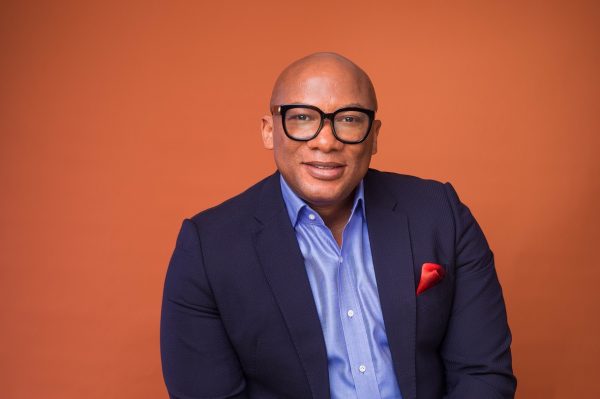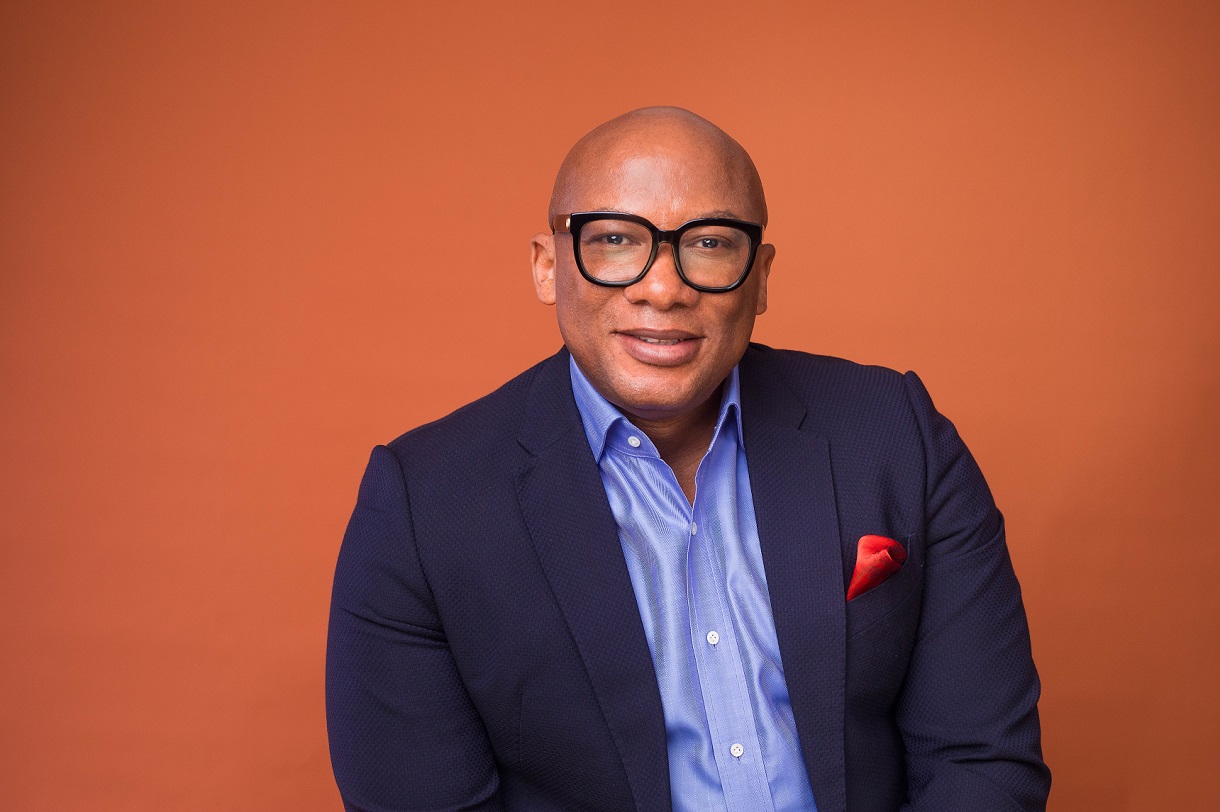
Mitchell Elegbe could pass for a man who’s dwelt in posh and ease all his life. He certainly has the looks to go with it: a fine physique, imposing fashion, and an august carriage. Plus, speech of the sort you might associate with “privilege”.
Read more about Tech
And there’s the fact that he’s the founder and CEO of a company which processes more than 90% of all card and mobile money transactions in Nigeria. That company is Interswitch, and it’s currently valued at $1 billion.
But Mitchell isn’t your average “middle-class boy turned rich entrepreneur.” His beginnings are truly humble. The challenges he had to surmount early in his life, and the fact that he did overcome them, should inspire every Nigerian.
This is the story of Mitchell Elegbe, the music cassette seller turned tech unicorn CEO.
Starting without a Father
Mitchell was born in Benin City in November 1973. The youngest child of his family, he never got to meet his father, who died before he was born.
The financial strain of raising several children alone would tell on his mother. He was eventually brought up by an uncle, who lived in the town of Aladja, in Delta State.
This phase wasn’t a period filled with material comforts. But the lessons he learned from his uncle proved formative. He says as much in his recounting of that phase.
Recalling the time he spent under the tutelage of this father-figure, Mitchell says:
“If you are looking at ‘rich’ in terms of material wealth, I won’t say I come from a rich home. But if you are looking at ‘rich’ in terms of values, then yes! While having wealthy folks can help one to succeed in life, it is not the principal determining factor.”
He goes on to say:
“I know of people who come from very poor homes who have made it, and others from rich homes who lost focus. So I think it boils down to the individual.”
Sign up for the Connect Nigeria daily newsletter
Supporting Himself through University
Later on, Mitchell was accepted into the University of Benin, where he studied Electrical and Electronic Engineering. There, he faced more financial difficulties. But being a man of action, he decided to brave the odds. He raised funds from as many side hustles as he could.
At some point, he borrowed money from a friend and used it to start a cassette recording business. He would travel to Onitsha, purchase audio tapes, and return to a studio. There, he would record music and sell the tapes on campus.
But soon, other people at the university began to do the same thing. This forced cassette prices downwards, and caused Mitchell’s revenues to thin out. He had to abandon the business.
“Then I switched to selling shirts,” he says.
“This is how I learned to read a market, and also time management—lessons that have become invaluable to me today.”
In the end, his determination to succeed paid off in more ways than just sustenance; He graduated with honours.
After this, he enrolled with the National Youth Service Corps (NYSC). At the time, he worked with Computer Systems Associates (CSA), a software implementation company which connected banks to the Society for Worldwide Interbank Financial Telecommunications (SWIFT).
Interswitch: The Beginning
His next employer was Telnet, a telecommunications company. Following a stint there, he was hired by Schlumberger and served as a Field Engineer in Scotland.
There, Mitchell had an “embarrassing” experience with an Automated Teller Machine (ATM). This was back when no such thing existed in Nigeria. It was after this incident that he got the idea to build an electronic payments system for Nigeria came to him.
A year later, he returned to his home country and began a second stint with Telnet. There was one thing on his mind: making financial transactions electronic, and therefore, more convenient. He believed that Nigerians would be better off if they were able to send, receive, and withdraw money without visiting a bank.
Mitchell shared the idea for electronic payments with his boss. Then he tried to pitch a switching solution to banks.
But he faced a brick wall.
Bank after bank rejected his proposal for an electronic payments system. There was barely anything like it in Nigeria at the time, and these financial institutions were wary of trying something that was locally unproven.
Undeterred by the lack of interest, he took a bold step. He decided to go all out with his solution, but outside of the safety of his employer.
In 2002, he set up Interswitch, with modest financing from Accenture. He also got a few supportive banks on board by giving them a stake in his new company.
Through partnerships with local and international financial institutions, Interswitch grew rapidly. A decade later, it had become a multinational organisation, with a presence spanning East and West Africa.
The year 2019 came with the biggest win of Mitchell’s professional life so far. Visa, an international payments giant, acquired a 20% stake in Interswitch for $200 million. That deal valued Interswitch at $1 billion, making it Nigeria’s first FinTech unicorn.
Register to attend the CN Business Mixer
It’s Impossible…Until Someone Does it
Mitchell’s story is inspiring and instructive. It shows that success is sometimes more the fruit of determination than it is of privilege. It suggests that a can-do attitude is perhaps the most crucial ingredient for excelling at anything worth doing.
As a fictional character has said,
“Will is everything; the will to act”.
The sheer force of will can lighten burdens and smooth out paths. But it can only be revealed in action, as Mitchell Elegbe’s life shows.
Got a suggestion? Contact us: [email protected]