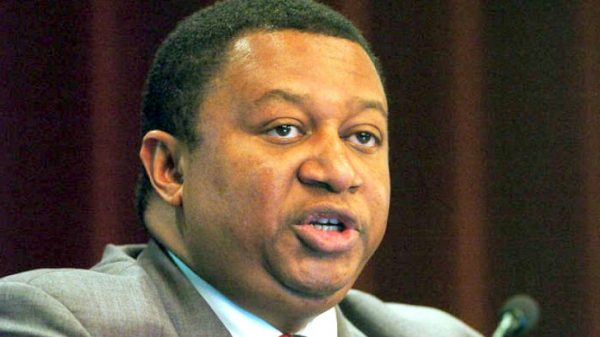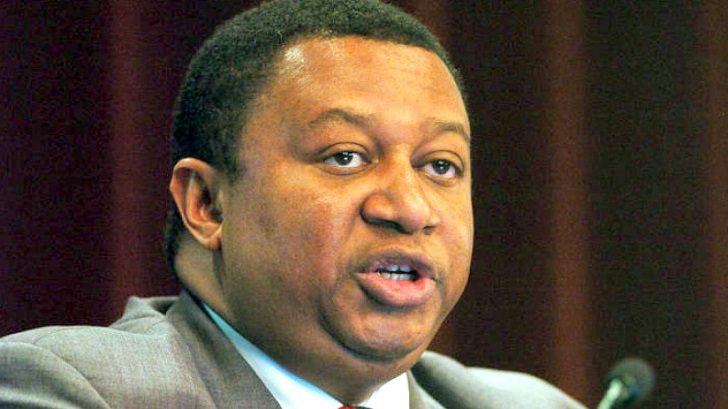
The Organization of Petroleum Exporting Countries (OPEC), Thursday, announced that it has appointed Mohammed Barkindo as its new Secretary General. This was made known at the end of its 169th Ordinary Meeting, which took place in Vienna. The Nigerian will replace Libyan Abdalla El-Badri, who has held the position since 2007. El-Badri was due to give way to a successor in 2012, but the inability of the organisation to agree on a replacement led to the extension of his tenure.
Mohammed Barkindo’s emergence has been attributed to several months of “shuttle diplomacy” spearheaded by Nigeria’s Minister of State for Petroleum Resources, Dr Ibe Kachikwu. Barkindo, a former head of the Nigerian National Petroleum Corporation, saw off competition from Ali Rodriguez Araque, (previously secretary general from 2001-2002), and Mahendra Siregar of Indonesia. He is expected to occupy the position for at least three years starting from August 1st, 2016.
Besides being helped by diplomatic moves from Nigeria’s petroleum minister, Barkindo’s chances were also boosted by his vast experience in the oil sector. He has spent 23 years in the NNPC, and the oil and gas industry. Positions which he held in the past include Managing Director/Chief Executive Nigeria Liquefied Natural Gas; General Manager, NNPC London office; and Head, International Trade, NNPC, London office. At OPEC, he had a 15-year stint on the organisation’s Economic Commission Board and was Acting Secretary General in 2006 until he handed over to El-Badri, who he now succeeds.
Amongst those who reacted to the announcement of Barkindo as OPEC’s new Secretary General was the Saudi Arabian Energy Minister, Khaled al-Falih. He spoke positively of Mr Barkindo’s competence, describing him as “highly respected and qualified”.
Production debates are likely to dominate the early part of the new OPEC minister’s tenure. A clash of interests involving member states with opposing views of what actions the organisation should take regarding production limits threatens OPEC’s unity. The Secretary General faces the daunting task of bringing the various interest groups to reach a common position, in the face of a fight by member states to maintain or expand their market share.
The tone sounded by Mr Barkindo in Vienna was, however, quite positive.
“The fact that OPEC has decided a secretary-general today after so many years of haggling is, in itself, a positive signal”, he said. For him, the body showed that it was still “one, strong organisation”.