

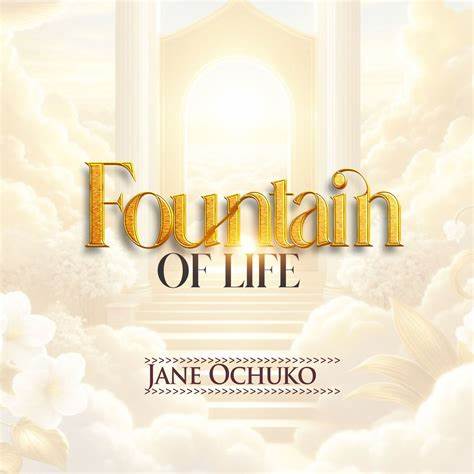
The Nigerian gospel song “Fountain of Life” by Jane Ochuko unfolds a rich tapestry of divine attributes and salvific power through its vividly expressive lyrics. Rooted in both English and Yoruba expressions, the song proclaims God’s unrivaled majesty and life‑giving capacity, drawing worshippers into deeper reflection on His character. Through titles such as “King of kings” and metaphors like an ever‑flowing river, the lyrics weave biblical allusions that underscore God’s transcendence, immanence, and redemptive work. This article will explore the theological insight and spiritual significance embedded in the song’s two verses and its powerful chorus, before drawing concluding reflections on its overall message.
Read more about Gospel music
Behind the Lyrics
The first verse presents a series of exalted titles – “King of kings, Kabiyesioh; Lord of lords, Odogwu Akataka; Fountain of life” – each grounded in scriptural revelation. The title “King of kings” echoes the heavenly Christ who wields supreme authority: “And on his robe and on his thigh he has a name written, King of kings and Lord of lords” (Revelation 19:16). Similarly, “Lord of lords” recalls Yahweh’s unrivaled sovereignty over all earthly powers (1 Timothy 6:15). Calling God the “Fountain of life” draws on the image in Psalm 36:9: “For you are the fountain of life; in your light we see light”, indicating that true spiritual vitality springs only from Him. By affirming “there is no one like You” (cf. Isaiah 46:9) and “all power belongs to You” (cf. Matthew 28:18), the singer acknowledges both God’s uniqueness and His ultimate jurisdiction over creation.
Register to attend the Connect Nigeria Business Mixer
In the second verse, the songwriter shifts to God’s eternal nature and sustaining grace. Addressing Him as “Ancient of Days, Arugbo Ojo” invokes Daniel’s vision of the everlasting One seated on the throne, whose dominion has no beginning or end (Daniel 7:9). Referring to God as “the river that never runs dry, Osimiri Atata” calls to mind Jesus’ promise of living water: “But those who drink the water I give will never be thirsty again” (John 4:14), and the prophecy of the Spirit poured out: “I will pour out water to quench your thirst” (Isaiah 44:3). The repetition of “Fountain of life” and “there is no God like You” reinforces the themes of eternal sustenance and exclusivity of worship, culminating in “all glory belongs to You” (cf. Revelation 4:11), which ascribes ultimate praise to God alone.
The chorus Intensifies the song’s testimony by depicting God’s dynamic intervention in both spiritual and natural realms. “When You speak, dry bones come to life” directly alludes to Ezekiel’s valley vision, where God’s word enlivens the hopeless: “I will make breath enter you, and you will come to life” (Ezekiel 37:5). “When You move, mountains turn to plain” echoes Isaiah’s promise of God preparing a level highway: “Every valley will be raised up, and every mountain and hill made low” (Isaiah 40:4), symbolizing removal of obstacles. Declaring “I am more than a conqueror” draws from Paul’s assurance that in Christ we overwhelmingly prevail over every hardship (Romans 8:37). Finally, “You have given me victory” resonates with the apostolic confession: “But thank God! He gives us victory through our Lord Jesus Christ” (1 Corinthians 15:57). Together, these lines celebrate God’s life‑giving, liberating, and triumphant power in the believer’s experience.
Beyond its poetic appeal, “Fountain of Life” serves as a theological catechesis, guiding worshippers through core doctrines: God’s sovereignty, the necessity of the Spirit, the assurance of resurrection, and the believer’s identity in victorious union with Christ. By blending indigenous language with biblical imagery, the song both affirms cultural identity and universal Christian truth. It invites listeners not only to affirm doctrinal statements but to internalize and live in the reality of God’s sustaining presence and conquering power.
Got a suggestion? Contact us: [email protected]
Conclusion
Jane Ochuko’s “Fountain of Life” articulates a multifaceted portrait of God as sovereign King, eternal sustainer, and triumphant Redeemer. Through its titles, metaphors, and scriptural allusions, the song encapsulates the Christian journey: from acknowledgment of God’s unmatched majesty to celebration of His transformative work in individual lives. Its powerful message urges believers to drink deeply from the well of divine life, stand firm in faith, and continuously glorify the One who alone possesses all power and honor.