

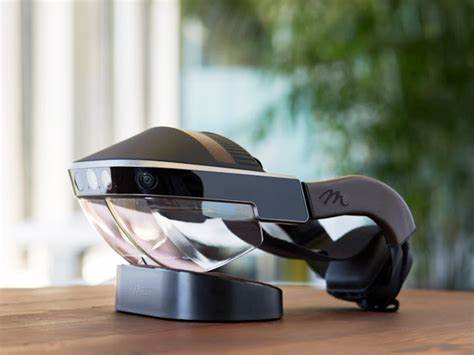
Augmented reality headsets overlay digital elements onto real‑world environments, enabling gamers to interact with virtual characters and objects in their physical surroundings. Globally, the AR and VR headset market is set to surge from USD 10.24 billion in 2023 to USD 34.72 billion by 2032 at a CAGR of 14.9 percent, with gaming representing over 40 percent of headset applications. In Nigeria, emerging but vibrant, AR headsets are no longer the preserve of multinational tech giants; local startups, importers, and gaming centers are making headsets accessible, affordable, and relevant to Nigerian players. This article examines hardware accessibility and market uptake, the burgeoning AR game ecosystem, and immersive experiences and eSports enabled by AR headsets.
Hardware Accessibility and Market Uptake
AR headset availability in Nigeria spans three tiers: high‑end consumer devices (e.g., imported Microsoft HoloLens, anticipated Apple Vision Pro), mid‑range headsets adapted for local retail, and DIY rigs using smartphone‑based viewers. The overall Nigerian AR market was valued at \$200 million in 2024, with projections of 30 percent CAGR through 2028; fueled by smartphone penetration reaching half the population.
Urban gaming arcades are bridging the gap where personal ownership remains cost‑prohibitive. VR Place Nigeria in Lagos and Playbox Abuja host AR and VR headsets for ₦5,000–₦7,000 per hour, allowing enthusiasts to sample experiences without upfront hardware investment. Meanwhile, e‑commerce platforms and electronics importers list mid‑range AR headsets (priced from ₦40,000 to ₦120,000) making the technology attainable for dedicated gamers.
Barriers remain: inconsistent power and internet connectivity hinder seamless AR sessions, and awareness of head‑mounted AR systems is low outside tech circles. However, government incentives for tech hubs and partnerships through the Nigeria Chapter of the VR/AR Association are driving import-easing policies and awareness campaigns.
Register to attend the Connect Nigeria Business Mixer
AR Game Ecosystem and Content Creation
As hardware proliferates, Nigerian developers and studios are crafting AR‑native games that reflect local narratives. Insightful3D Studio and Imisi3D lead this charge, producing location‑based AR experiences for tourism, education, and branded gamified campaigns. For instance, an Imisi3D release invites Lagosians on an AR scavenger hunt through historic districts, blending GPS tracking with 3D‑modeled cultural artifacts; a template for future community‑driven gaming.
Mobile AR gaming also finds traction: while global hits like Pokémon Go are unofficially accessed by Nigerian players, homegrown apps are emerging that leverage ARCore and ARKit frameworks on mid‑range smartphones. These apps overlay virtual opponents in real environments, encouraging physical movement and social interaction; an antidote to sedentary gameplay.
Collaborations between tech incubators and universities are training a new pipeline of AR developers. Workshops sponsored by the VR/AR Association and tech‑education boards equip students with Unity and Spark AR skills, ensuring that content creation scales alongside hardware diffusion.
Sign up for the Connect Nigeria daily newsletter
AR‑Driven Gaming Experiences and eSports
AR headsets are redefining competitive and cooperative gaming. At VR Place Nigeria, AR‑enabled multiplayer arenas pit teams against hybrid real‑world obstacle courses augmented with virtual targets; combining physical agility with digital strategy. Such formats are migrating to informal eSports tournaments, with prizes ranging from cash to gaming gear, signaling a nascent AR eSports circuit.
Training and skill development also benefit: AR‑driven game tutorials project contextual instructions onto real peripherals, shortening learning curves for complex titles and fostering inclusivity among less‑experienced gamers. These immersive guides enhance retention of mechanics, crucial for local eSports teams competing regionally.
Looking ahead, as AR headsets become more affordable and network infrastructure improves, Nigerian gaming is poised to leapfrog into hybrid tournaments that blend live audiences with virtual spectators; powered by real‑time AR overlays, spectator modes, and localized game lore.
Got a suggestion? Contact us: [email protected]
Conclusion
AR headsets are catalyzing a paradigm shift in Nigerian gaming, unlocking immersive experiences that marry digital innovation with local culture. Through expanded hardware access, a growing ecosystem of AR‑native games, and evolving AR eSports formats, Nigeria stands to become a regional leader in extended‑reality entertainment. Addressing infrastructure and awareness challenges (via policy support, developer training, and community engagement) will be vital to sustain this momentum and fully realize the potential of AR‑enhanced gaming in Nigeria.