Just before you source for flowers for your garden, you might want to know their names and a little more about them. Here are twenty you can find in Nigeria.
1. Aloe Vera:

The popular succulent aloe is easy to grow and is grown for beauty and medicinal purposes.
2. Cacti:

Because of its thorns, these desert plants are useful as hedges or potted plants. They live long and hardly require water.
3. Calla Lily:

Calla lilies are native to Nigeria and other African countries. The funnel-shaped flowers with white, yellow or pink petals and a protruding spike and elongated leaves make it a charming constituent of a bridal bouquet.
4. Celosia:

Though celosias are planted primarily as food in Nigeria they are planted as flowers in other places because of their bright red and yellow inflorescence. It is known as soko in Yoruba and also known as Lagos spinach or cockscomb.
5. Climbing Ivy:

It is normally seen growing on walls and they are a beautiful sight, though the walls should be strong enough to resist cracking by the plant.
6. Cordyline:

Different varieties come with several colours; from purple and pink to green and yellow.
7. Croton:

The foliage of croton plant is a combination of bold warm colours –red, yellow and orange, and deep green, and this makes them quite attention-grabbing.
8. Crown of Thorns:

They have attractive red flowers but are full of thorns! They can be planted as a barrier to stop people from walking on lawns.
9. Dumb cane:

The green and white/yellow dumb cane is a common indoor plant and is used in small spaces to remove toxins and improve air quality. Although they are toxic, effects caused when chewed are temporary and hardly fatal.
10. Hibiscus:

We know the popular red and white hibiscus, right? And we know it is possible to grow purple hibiscuses, thanks to Chimamanda Adichie.
11. Ixora:

An Ixora plant has different colours –red, white and green, because of this, it serves as more than a hedge trimming plant. The flowers and putting in a vase for indoor décor. I used to make garlands with them and sucked the flower’s juice when I was much younger.
12. Mother In-Law’s Tongue:

Also known as the snake plant or viper’s bowstring hemp, this plant is native to Nigeria. It is a common indoor plant and is beneficial in air purification as it removes airborne toxins.
13. Mussaenda:

This is a small ornamental tree. Its leaves are hairy, petals are mostly pink are velvety and flowers are yellow.
14. Orchids:

William Stanford in a report identified 401 species of orchid in West Africa, most of which are found in Nigeria. Like the Tecoma stans, the orchid is also a post stamp figure and is found on ₦1, ₦1.50, ₦2, ₦5 and ₦10 Nigerian post stamps. There’s also a book on orchids by L. B. Segerback, Orchids of Nigeria; so yes, they are that popular here.
15. Purple Heart:

The trailing Purple Heart has dark purple pointed leaves and small flowers. It also improves indoor air quality.
16. Red Acalypha

This is a hairy plant with spiked leaves which are dark green and red in colour. It is also used to treat skin diseases in Nigeria.
17. Roses:

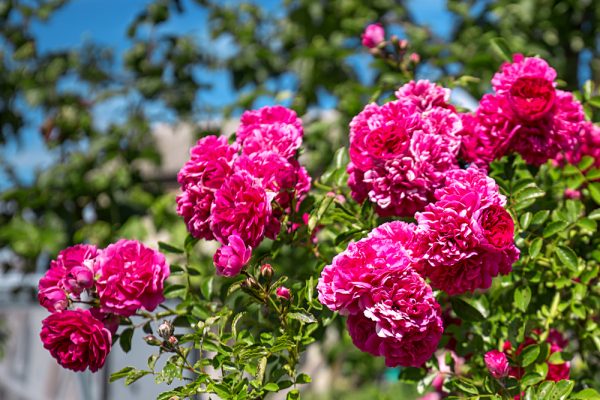
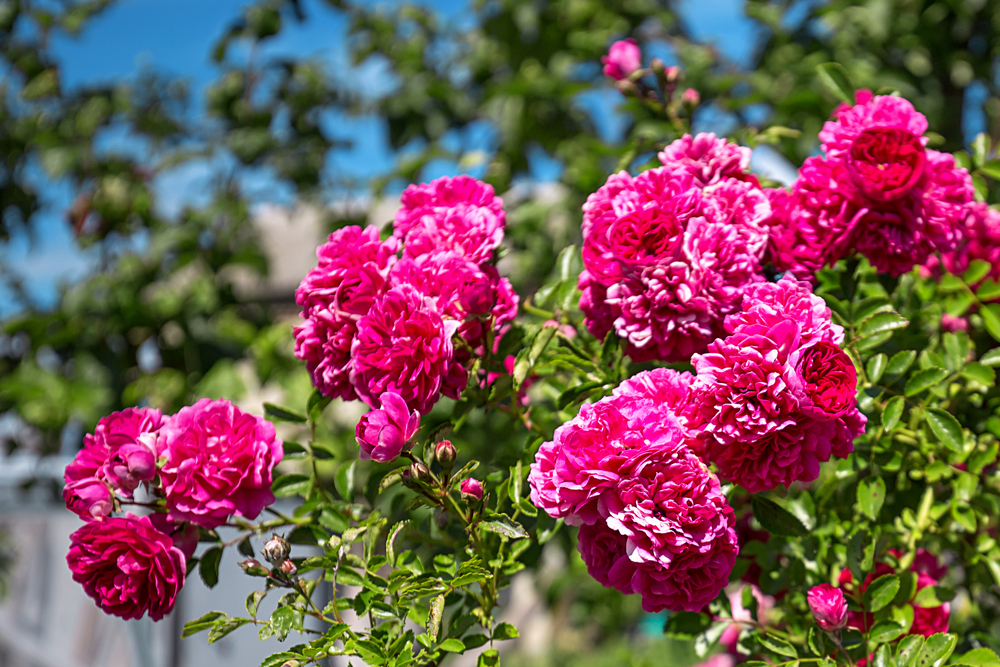
Roses produce one of the loveliest fragrances; they just fill the air and the flowers are beautiful.
18. Spider Plant:

Spider plants have long slender green and white leaves, are easy to grow and preferably grown in flower pots, and are native to Africa.
19. Sunflowers:

Not only grows like weeds in Nigeria but is useful for its oil. With buildings and road taking up much land, Nigerians should grow more of this.
20. Yellow Bush:

It was somewhat tedious trying to identify the common lemon-green hedge plant. I was told by a gardener that the one identified by gold fruits and purple flowers is called Yellow Bush (scientific name is Durenta erecta). Another common green hedge plant used in Nigeria is the Murraya which can be trimmed into almost any shape.
You may also like: 15 Trees Popularly Used for Landscaping in Nigeria.